my work moves between the visual avant-garde, utopian and dystopian literature, historical pain, and everyday dark humour
i am interested in how beauty, silence, monstrosity, movement, diplomacy, and technocracy reorganise what becomes visible, as well as in what anomalous cases reveal about otherwise normal structures and systems
[…] For a book seeking inspiration in the Tang, this is a useful reminder that power does not necessarily mean greater freedom. Female ambition need not come with plans for anyone else’s liberation or happiness. The throne has changed occupants, not its terms — a distinction that would hardly trouble Claire Underwood in House of Cards or Cersei Lannister in Game of Thrones.
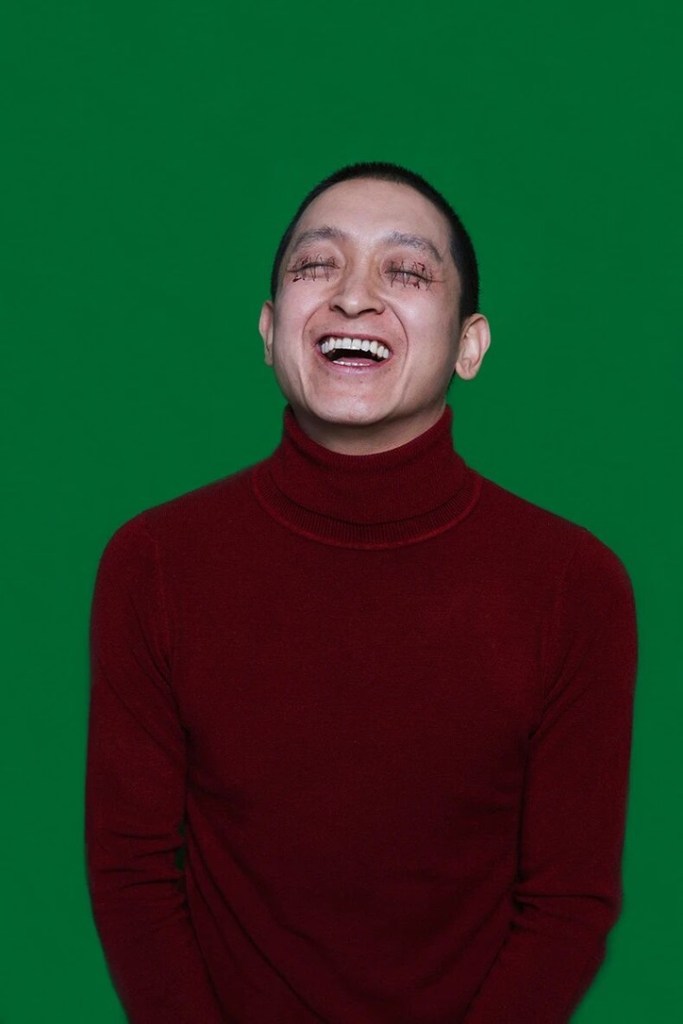
[…] Pain is not eliminated but reorganized, absorbed into systems of value, expectation, and identity. If suffering becomes a measure of worth, its absence invites suspicion: ease appears as complacency, rest as weakness, refusal as failure. Alternatives recede not through prohibition but through moral reconfiguration. What remains is a condition in which pain no longer interrupts life, but defines it.
Liu Chengrui, Sad, 2016. Performance and Photograph, 120*80cm. Image courtesy of the artist.
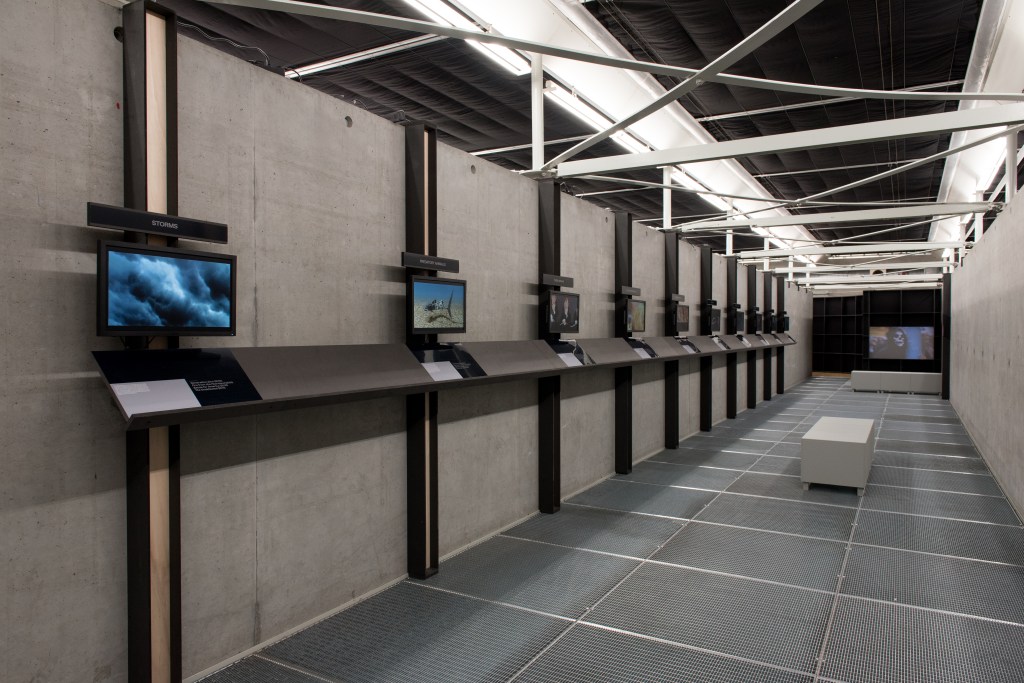
[…] If the ‘farms’ once promised a digital utopia — an imagined community freed from state control — they now embody a more unsettling truth about contemporary populism: that participation can itself become a form of capture.
Jonas Staal, Steve Bannon: A Propaganda Retrospective, 2018. Installation view at Het Nieuwe Instituut, Rotterdam. Image courtesy of the artist.
[…] The exhibition does not attempt to empty the titular label of political meaning, but rather translates it into the codes of display: what appears in the galleries is what can be stabilised as image or memory. Here, political art is not silenced, but rerouted, freed from immediate risk, yet held firmly within the limits of the institution. As George Steiner once observed, ‘Language can only deal meaningfully with a special, restricted segment of reality. The rest, and it is presumably the much larger part, is silence’.
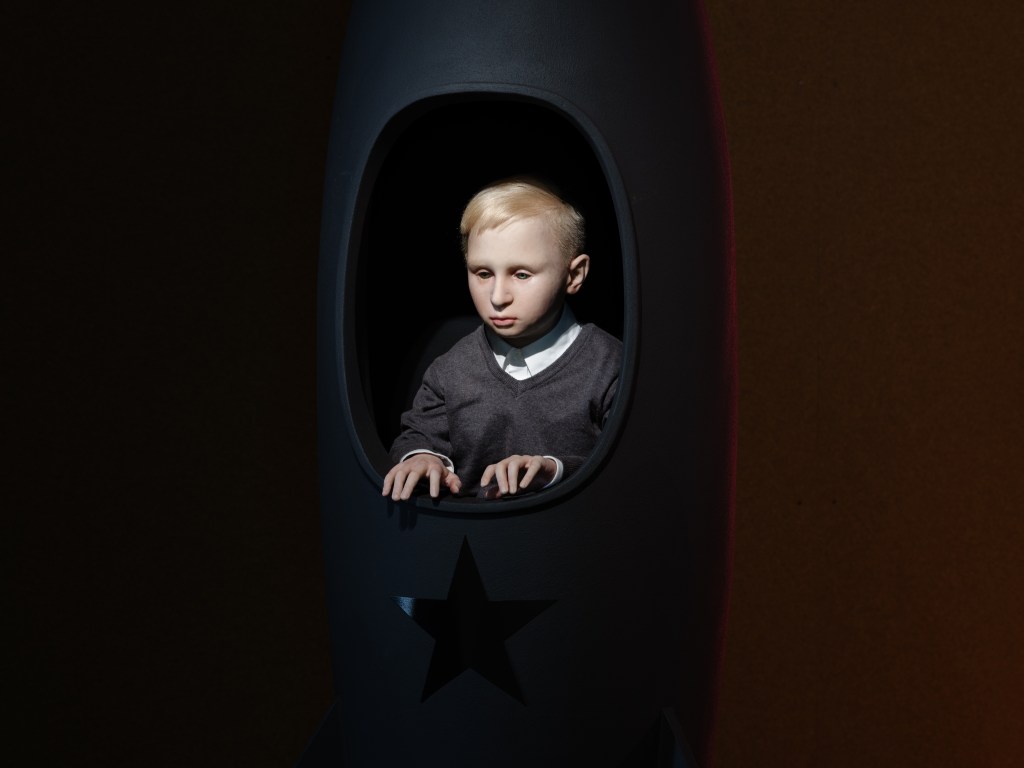
Once Upon a Time, by Li Wei. 2019. Silicone, metal, 3D-printed plastic, paint, clothing and human hair. (Courtesy the artist and the White Rabbit Collection; photograph Hamish McIntosh; exh. White Rabbit Gallery, Sydney).
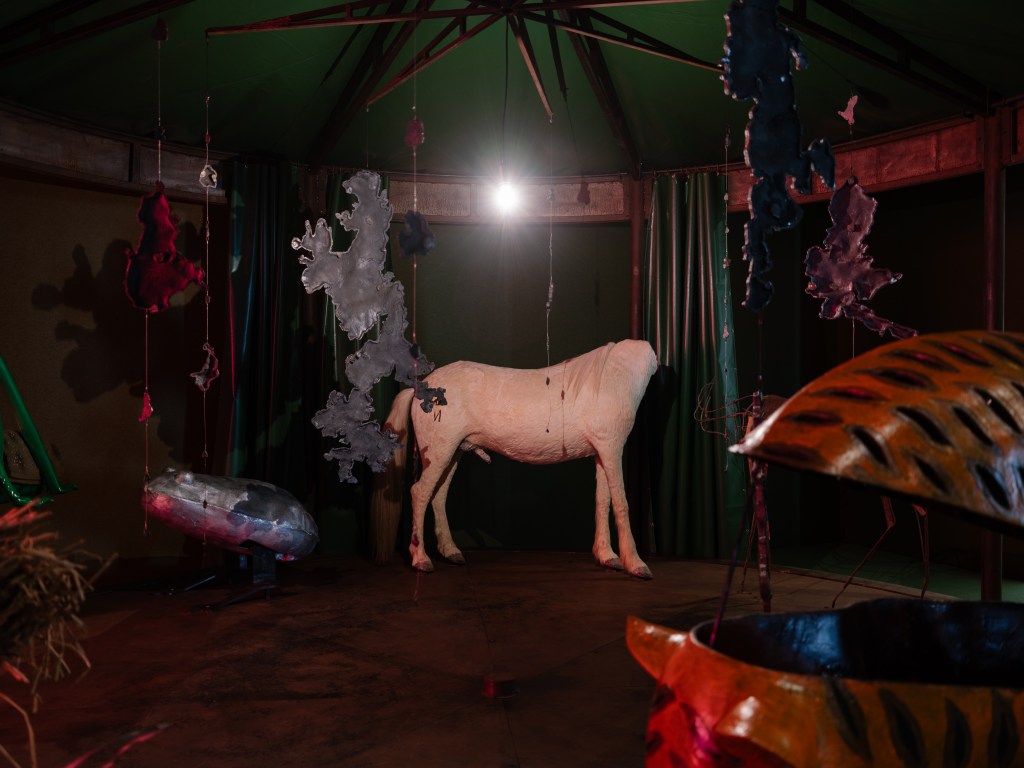
Les Consoles de Jeu Souveraines, by Huang Yongping. 2017. Steel, aluminium, bronze, wood, plastic, fibreglass, paper, straw and taxidermy horse, dimensions variable.(Courtesy the artist and the White Rabbit Collection; photograph Hamish McIntosh; exh. White Rabbit Gallery, Sydney).
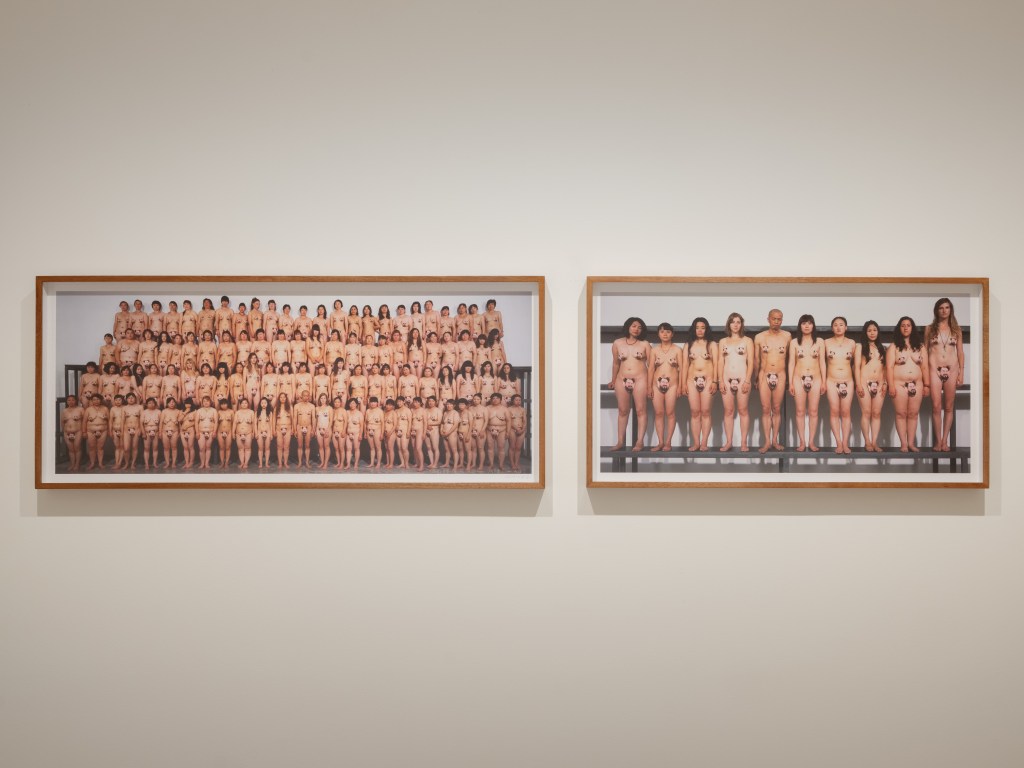
Swimsuits, by He Yunchang. 2011. Performance (all participants’ bodies partially covered by cut-out photographs of Ai Weiwei’s face) and inkjet prints, dimensions variable. (Courtesy the artist and the White Rabbit Collection; photograph Hamish McIntosh; exh. White Rabbit Gallery, Sydney).
It presents a case study of the widely known — and at times controversial — artist Ge Yulu and his interventionist practice. Through an account of Ge’s life and career, including his early years as a grassroots migrant artist navigating precarity in Beijing, the essay explores how radical artistic gestures are gradually tempered, and often reshaped into more palatable forms that conform to institutional aesthetics. At the same time, it shows how a persistent critical impulse — despite the risks of censorship, social marginalisation, and financial hardship — sustains hope and continues to provoke public engagement.
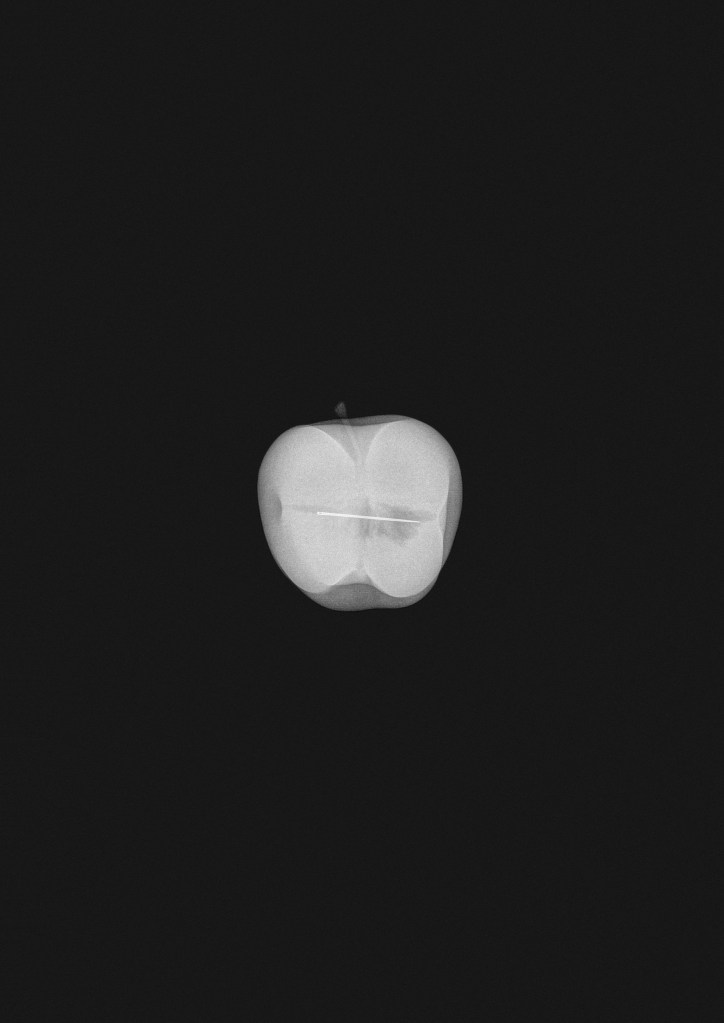
In early 2024, a one-minute video released by a WeChat account went viral in China. Although deceptively titled Wishing You Safe and Sound, the content displays how artist Liu Yaohua processed his ‘cruel experiment’ in his 2022 piece Disturbed, during the zero-Covid, by inserting needles into growing apples in the tree and surveilling their developing deformities. The visible Likes and Reposts reached a maximum of 100K+; click-through rate, checked by the account owner, was over 20 million. This data was collected from only one self-managed account on one social media platform. The actural viewers number could be hundreds of millions and beyond due to China’s colossal netizen population and swift spread. Seeing a conceptual art appreciated by such a vast audience is a phenomenon.
Liu Yaohua, Disturbed, 2022. Image Courtesy of the Artist.
— Brother Day to Brother Dawn in Foundation, the 2021 Apple TV+ adaption of Issac Asimov’s 1951 sci-fi epic
Cao Fei is a Contemporary Chinese artist who has exhibited at New York’s PS1 (2016), Paris’s Pompidou Centre (2019), and London’s Serpentine Gallery (2020). Her current exhibition, My City is Yours, has found a fitting southern hemisphere home at the Art Gallery of New South Wales’s new Naala Badu building, a cavernous space specifically designed for sprawling and spectacular contemporary art very much in the manner of Tate Modern and MoMA (and indeed, the building was originally named “Sydney Modern”).
[…] Cao’s utopianism, so spectacularly put on display at the AGNSW, is mild and easy on the eyes. It is also far more pleasing and entertaining for the general public, and for institutions increasingly wary of criticism and controversy. A global contemporary art world that is weary of confrontational politics embraces Cao as an appealing alternative. She offers Chinese post-socialist visual elements bundled up in a mode of Western modern stream of consciousness, presenting Australian audiences with an experience that feels fun, entertaining and fundamentally, safe — both in and out of China.
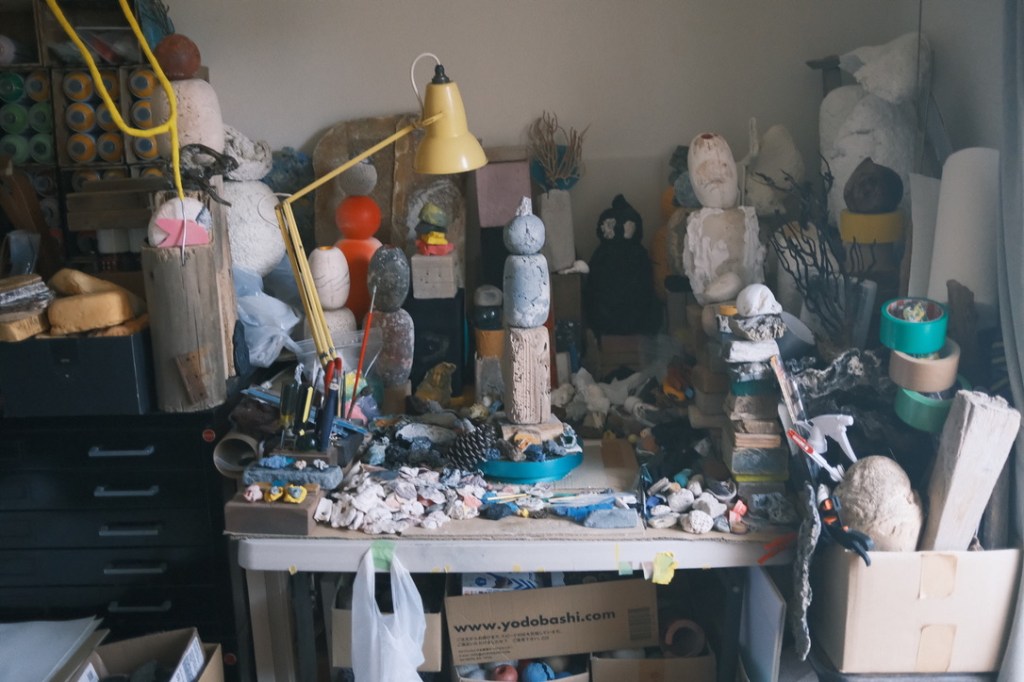
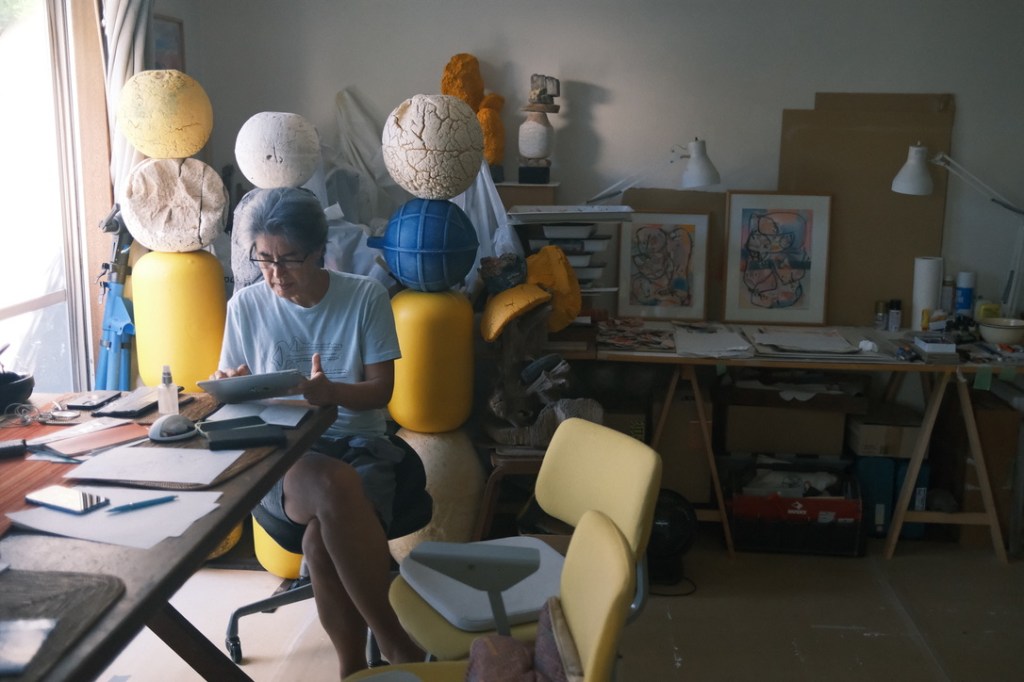
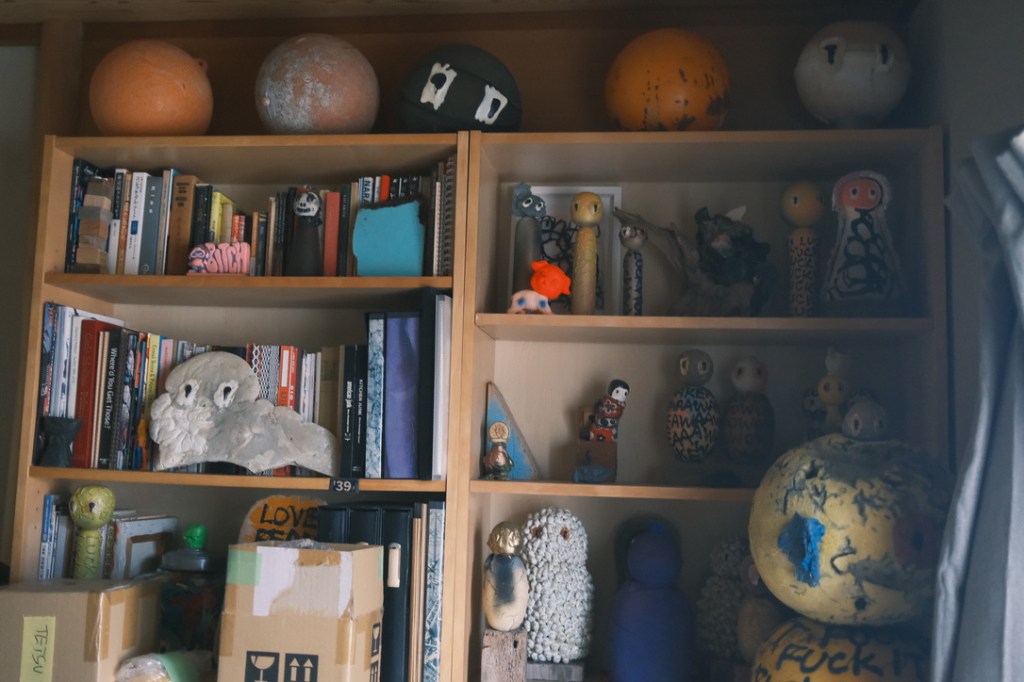
Artist Tetsu Takeda left Japan for America in 1986 and returned to Japan in 2011. Shortly after the Fukushima nuclear disaster, Takeda started identifying himself as a “professional artist” and only doing “high art” by rethinking life and our role as human beings interfering with nature. What makes Takeda distinct from those “big names”, such as Yayoi Kusama, Takashi Murakami, Yoritomo Nara, Yoko Ono, Hiroshi Sugimoto, and Chiharu Shiota, is his everyday mudane routine. He is an eccentric collector of ocean rubbish flushed ashore by waves. In his tiny home studio, he creates various big-eyed rubbish creatures in diverse forms, shapes, dimensions, and colours in his unorthodox and even childish way reminiscent of Victor Frankenstein in this lab. Doing new artistic endeavors is a ritual of giving life — to “vitalize” rubbish — and inhabiting a reformulated secrect society of nature, whether privately (in his home) or publicly (in galleries).
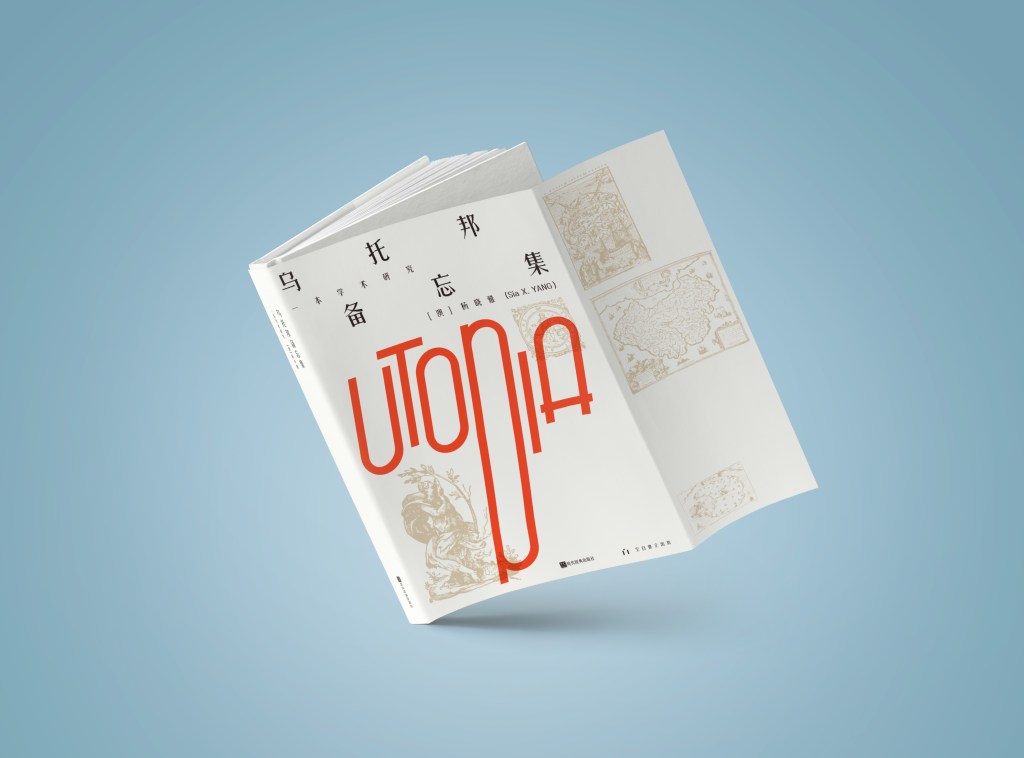
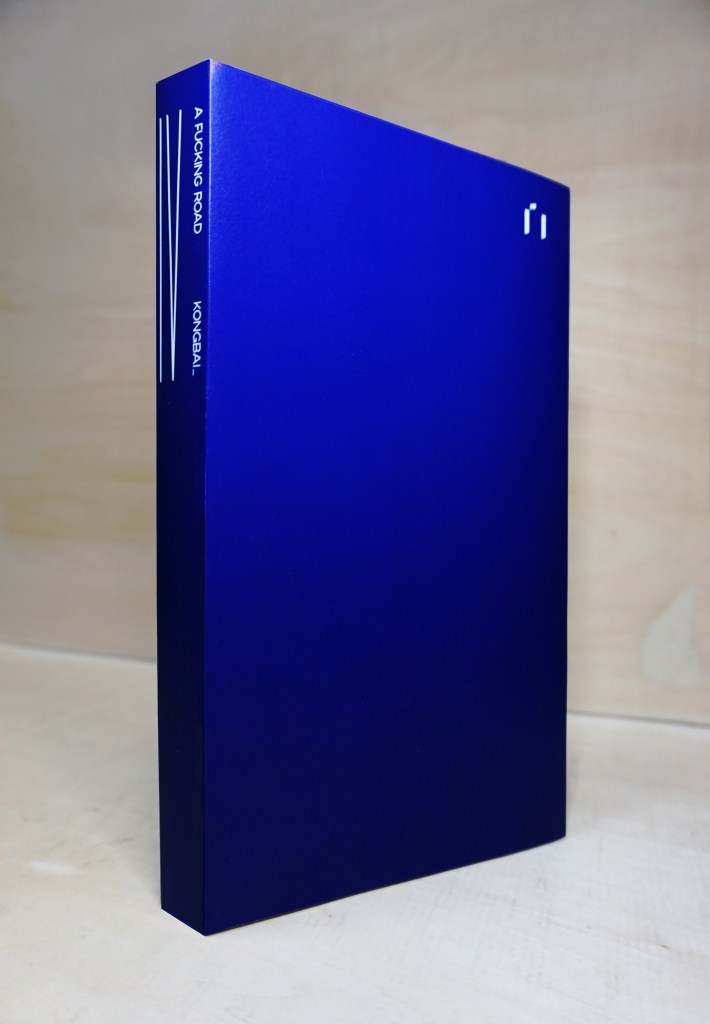
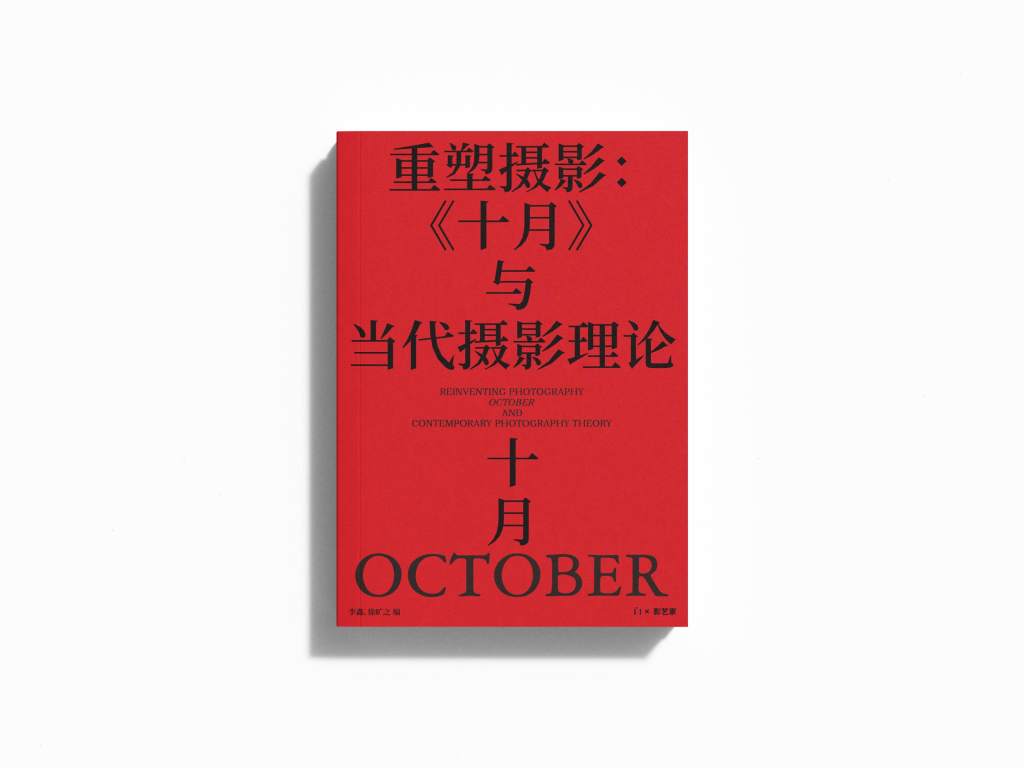
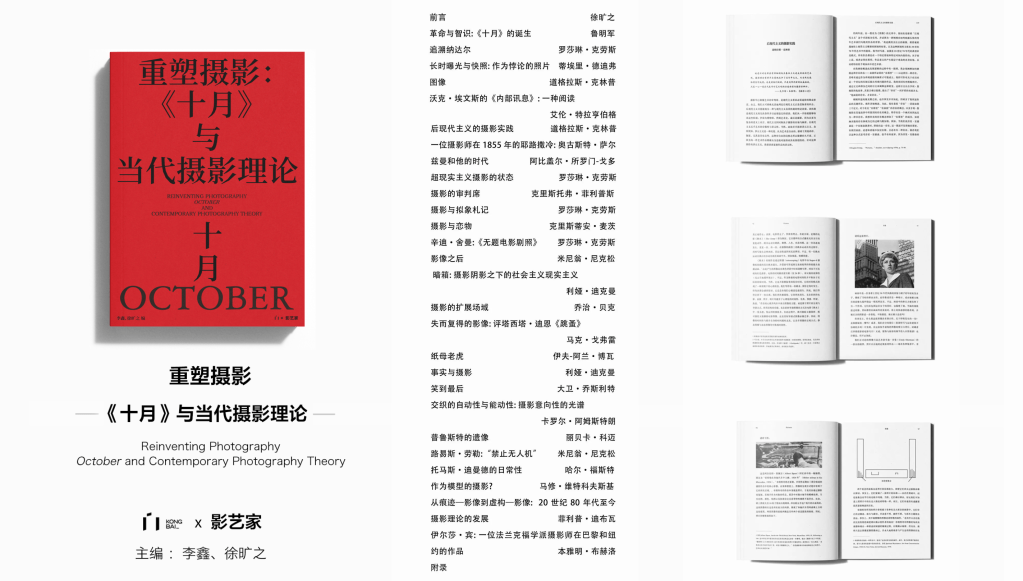
This Chinese book on Thomas More and the history of the literary utopia was edited and designed by KONGBAI [Blank 空白] and published by Times Classic Press 時代經典出版社 in Hong Kong.
From Blank to Blank — A Threadless Way I pushed Mechanic feet — To stop — or perish — or advance — Alike indifferent —
If end I gained It ends beyond Indefinite disclosed — I shut my eyes — and groped as well ‘Twas lighter — to be Blind —
Emily Dickinson
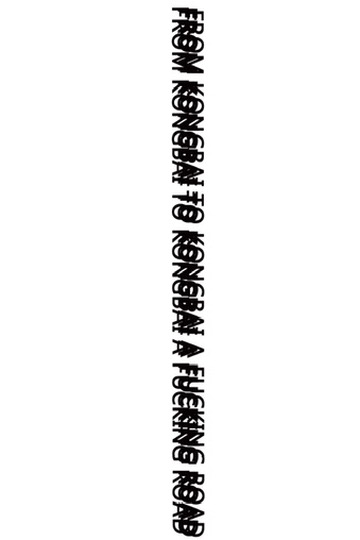
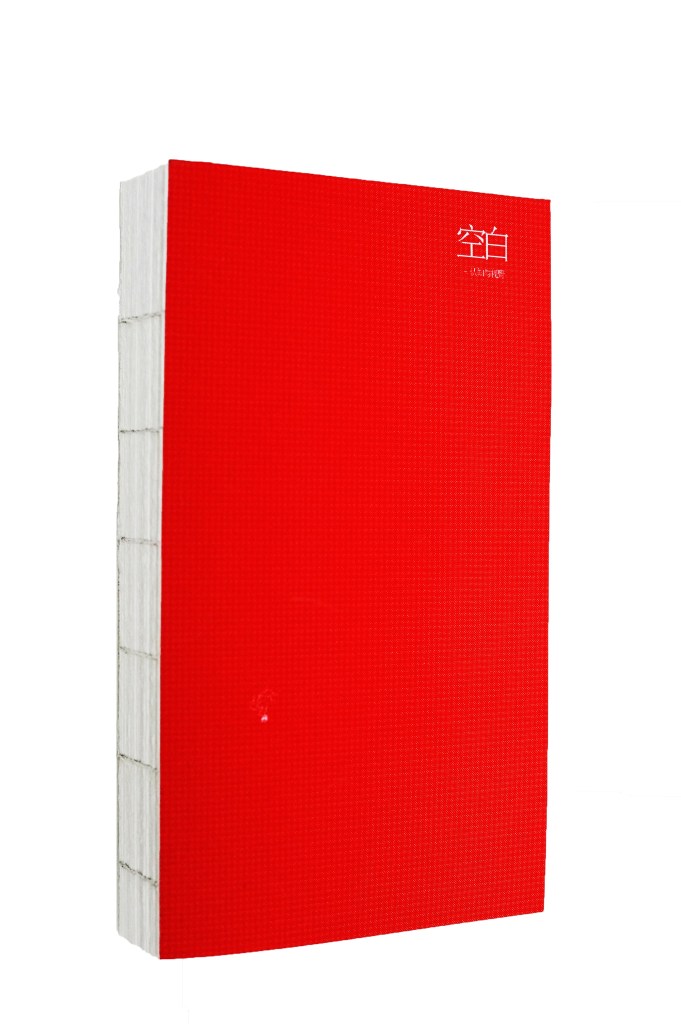
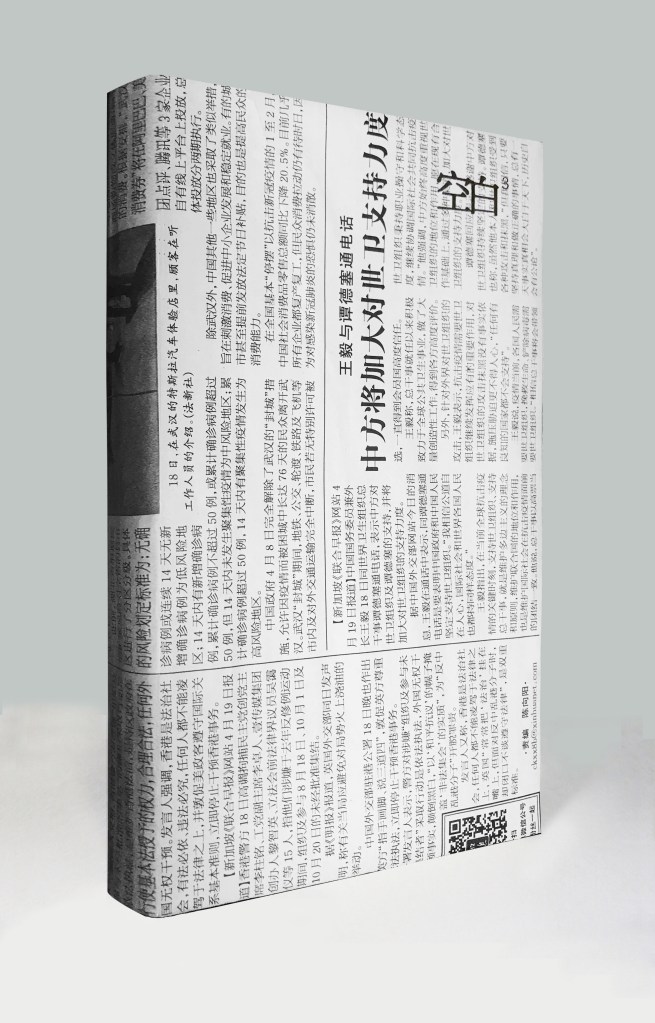
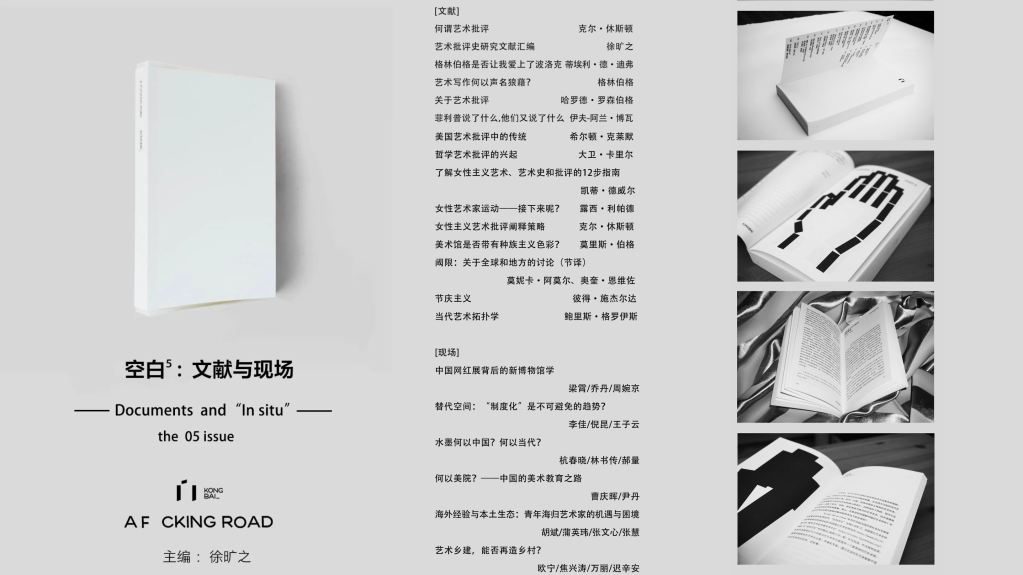
In Chinese, ‘Blank’ is ‘Kongbai 空白’.
Due to the state’s choice of censorship, independent publishing is substantially forbidden in China today, making it an underground activity. I only became aware of this reality recently when Xu Kuangzhi, founder as well as the only working staff of KONGBAI, was managing to publish and circulate my book on More’s Utopia with an ISBN acquired from Hong Kong. The book has been confidently polished to avoid sensitive words, phrases, rhetorics and controversial topics, protecting all in China involved (and will be involved) in producing and communicating this work.
In 2013, Xu, a sophmore at Central Acadmy of Fine Art in Beijing and has yet to physically travel to the West, personally initiated searching, collecting, translating, publishing, and circulating a vast bunch of Western art historical texts and critiques. In his words, he just loved to do it, even though he knew the number of readers would be very small. Gradually, many art history and literary scholars and professional translators, both inside China and studying abroad, volunteered to participate in Xu’s ambitious but quiet project by sharing original foreign texts and undertaking translation loads (mainly written and published in English, some in French and Japanese).
Unfortunately, Xu’s online platform, KONGBAI [Access to data 2015-21], with over 30,000 subscribers, was permanently suspended one day in October 2021 when he was translating Holland Cotter’s New York Times review of the Guggenheim Museum’s Art and China after 1989. The article was not so dangerous, and Xu wisely employed homophones and symbols to replace potentially sensitive words such as ’89’, ’64’, and ‘Ai Weiwei’. Xu had not published it in a digital form; he was revising it. Yet, all of a sudden, a short official notice shot him with a sense of threatening: ‘Someone had lodged a complaint against you’ (but in which no further detailed information was provided). It petrified Xu and all of us, unveiling the all-knowing digital Big Brother.
Many authors and online publishers in China, like Xu, have to prepare one or more alternative platforms to transfer their published but censored resources and redirect their readers to other virtual communities. There is an old Chinese idiom to describe them, ‘wily rabbits always have three burrows 狡兔三窟’. I prefer to call them ‘guerrilla authors’. Xu, an artist and book addict, also produces limited editions of paper books to display and reserve translations for inner-circle circulation. These exquisitely designed books could hardly be listed for sale as it is against the law to make money through any independent publication.
At the moment, the KONGBAI Series seems to be hardly used: neither in-class teaching nor seminar discussions. Xu once explained to me that the ‘core wisdom’ of the Chinese intelligentsia is to pick and make any foreign texts be used, not be read, generating pragmatic value that suits China’s situation to earn power. Once it is fully used (such as Marxism), it becomes propaganda.